Skip to content
odoo integration services odoo erp integration odoo api integration

Trusted Odoo Integrator for ERP, CRM, API & Ecommerce Platform Integration

Kailey R
Kailey R |

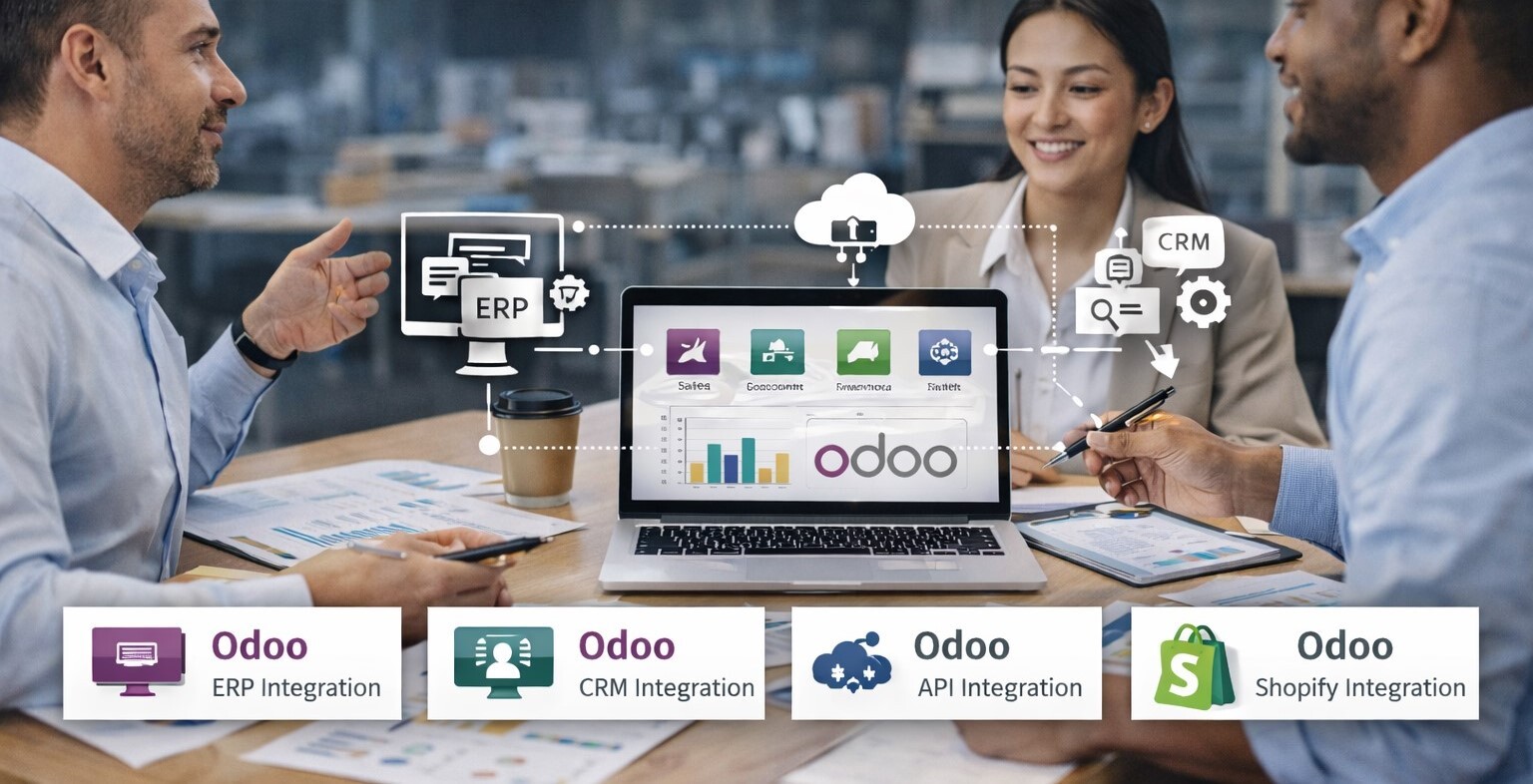
Businesses operating globally rely on connected systems to manage customers, orders, finances, websites, warehouses, and internal applications. When tools don’t communicate, teams lose time, duplicate data, and struggle to scale. A trusted Odoo integrator solves this challenge by connecting ERP, CRM, API, and ecommerce platforms into one synchronized digital ecosystem.

This blog provides a complete, user-centric guide to Odoo integration services, key integration benefits, use cases, evaluation criteria, common integration flows, and best practices that businesses worldwide can apply to streamline operations, improve data accuracy, and scale efficiently.


1.Why Businesses Need a Trusted Odoo Integrator


A trusted Odoo integrator is more than a technical resource — they are responsible for system synchronization, business continuity, automation logic, API architecture, and module alignment. ERP success depends heavily on integration reliability. Whether a business needs Odoo ERP integration, CRM unification, marketplace synchronization, or Odoo Shopify integration, the right integrator ensures uninterrupted data flow between platforms.

Businesses should work with an expert provider who understands both technical and functional logic behind:

  • Odoo ERP integration for operations, finance, inventory, procurement, and fulfillment
  • Odoo CRM integration for pipeline tracking, lead automation, customer insights
  • Odoo ecommerce integration for order, product, customer and stock synchronization
  • Odoo API integration for secure third-party system connectivity

When these integrations work together, businesses unlock centralized reporting, automated workflows, structured data flow, and real-time visibility across departments.


2.Understanding Odoo Integration Services


Odoo integration services allow businesses to connect Odoo ERP with external platforms, marketplaces, business applications, websites, and automation engines. A professional Odoo integrator uses API frameworks like REST, XML-RPC, or custom middleware to create secure, fast, and scalable integrations.

Core integration categories include:

A. Odoo ERP Integration

Odoo ERP integration unifies accounting, inventory, HR, procurement, and internal applications in one environment. It ensures centralized data access and automated synchronization between departments.

B. Odoo CRM Integration

Odoo CRM integration brings all customer interactions, sales pipelines, lead sources, email communication, support history, and pipeline analytics into one structured system.

C. Odoo Ecommerce Integration

Odoo ecommerce integration synchronizes digital storefronts and ERP order processing. It enables automatic product updates, centralized order fulfillment, and inventory accuracy across all online channels.

D. Odoo API Integration

Odoo API integration allows businesses to connect Odoo with payment gateways, shipping tools, accounting systems, analytics dashboards, marketing platforms, and external applications using secure endpoints.

E. Odoo Shopify Integration

Odoo Shopify integration automates order, product, stock, and customer synchronization between Shopify storefront and ERP backend. It reduces manual data entry and improves fulfillment speed.


3.Benefits of Working with a Reliable Odoo Integrator


When businesses invest in trusted Odoo integration services, they gain:
  • Centralized customer, order, and product data
  • Faster operations through automation
  • Reduced manual errors and data duplication
  • Scalable system architecture for growing teams
  • 24/7 real-time system synchronization
  • Secure API endpoints with token authentication
  • Webhook-based order and stock monitoring
  • Smarter dashboards for ERP + marketplace insights

These benefits make Odoo ERP integration one of the most flexible, affordable, and scalable ERP integration solutions for modern businesses worldwide.


4.Common Integration Flows for Global Business Systems


Sales & CRM Data Flow

  • Leads generated from website, email, or marketplace feed directly into CRM
  • Pipeline stages automate internal notifications and follow-ups
  • Customer history syncs with ERP sales orders

Product & Inventory Sync

  • Product master data managed from ERP updates ecommerce platforms automatically
  • Stock levels sync across all connected channels
  • Automated re-ordering rules trigger procurement

Order & Fulfillment Automation

  • Marketplace orders push into ERP via API or webhook listeners
  • Warehouse rules assign stock movement automatically
  • Invoice generation and payment tracking update in real-time

Ecommerce & Shopify Flow

  • Products, customers, pricing, and stock sync between Shopify and ERP
  • Orders auto-create delivery slips, invoices, and warehouse tasks
  • Customer data centralizes for future campaigns and support


5.Key Evaluation Criteria Before Hiring an Odoo Integrator


Criteria

What to Validate

Integration Experience

ERP + CRM + ecommerce deployments

API Knowledge

REST/XML-RPC endpoint architecture

Marketplace Integration

Shopify and ecommerce sync engines

Performance Reliability

Queue handling, retry logic, fail-safe APIs

Functional Alignment

ERP logic mapped to real business workflows

Support Model

Long-term functional support and monitoring

If your business needs multi-platform synchronization, ensure your Odoo integrator has experience in both ERP and ecommerce automation.


6.Best Practices Followed by Professional Odoo Integrators


Modular Integration Design

Implement integrations that support phased module expansion without disruption.

Secure API Architecture

Use token authentication, encrypted API calls, and role-based access to ensure secure data exchange.

Real-Time Sync Engines

Use webhook listeners, message queues, and automated error recovery to ensure high system availability.

Performance-Optimized Data Handling

Use batch processing, queue management, and retry logic for high-volume ERP data transfers.

Post-Deployment Functional Support


Monitor API health, order sync, stock updates, user adoption, and workflow performance.


7.Who Should Hire Odoo Integration Services

Global businesses should hire Odoo integration services if they need:

  • ERP module sync across finance, sales, warehouse, and procurement
  • CRM unification with sales pipeline automation
  • Shopify storefront and ERP order synchronization
  • API connectivity with external applications
  • Centralized dashboards and analytics
  • Reliable system support that scales


8.Future-Ready ERP and Marketplace Connectivity


Businesses worldwide are adding:

  • AI-driven workflow automation
  • IoT triggers for warehouse or manufacturing modules
  • Advanced marketplace synchronization
  • Mobile-first dashboards for remote operations
  • High-volume API architecture for global scale

Consultants experienced in offshore Odoo development often support these upgrades efficiently.


  • Conclusion

A trusted Odoo integrator enables businesses to connect ERP, CRM, Shopify, and ecommerce platforms into one intelligent digital ecosystem. From Odoo ERP integration to Odoo CRM integration, Shopify automation engines, and secure API connectivity, the right partner ensures your system becomes a long-term growth asset.
Share this post