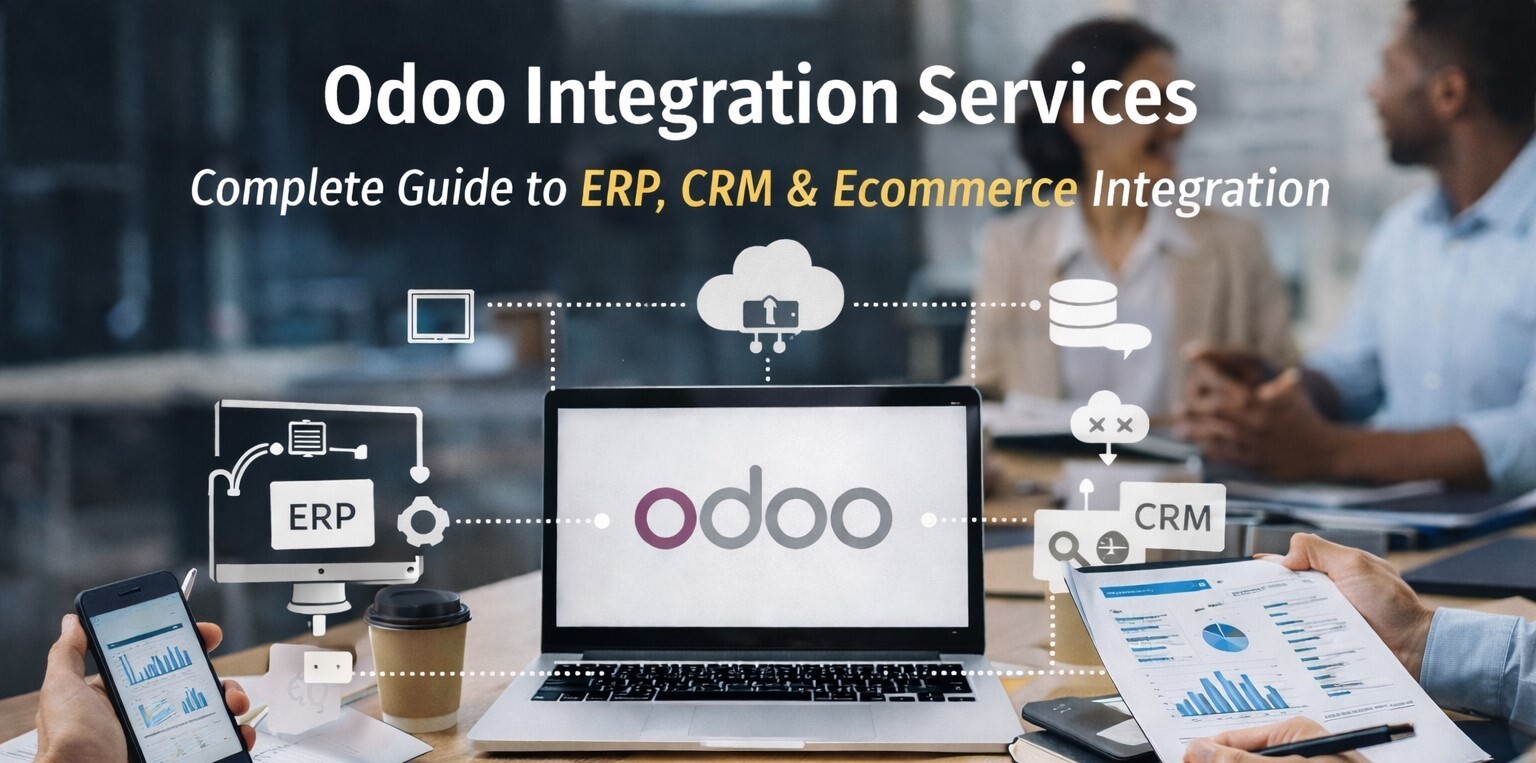
Modern businesses rely on multiple software platforms to manage operations, customer data, and online sales. But disconnected tools create inefficiencies, data silos, and workflow delays. This is where odoo integration services become essential — helping companies connect their ERP, CRM, ecommerce platforms, and external applications into one synchronized ecosystem.
Odoo is an open-source, modular ERP platform that supports seamless integration with third-party systems. Whether it's odoo api integration, odoo ecommerce integration, or odoo crm integration, a well-built integration strategy ensures automation, real-time data exchange, and scalable growth.
Let’s explore everything you need to know about Odoo integrations, including benefits, integration types, common challenges, and how an odoo integrator helps build a smarter business system.
1. What Are Odoo Integration Services?
Odoo integration services refer to connecting Odoo modules with external software and platforms to ensure smooth data exchange. Instead of managing separate systems for accounting, inventory, sales, customer management, or online stores, integration ensures all platforms communicate automatically.
Integration helps businesses:
- Sync data across platforms in real time
- Reduce manual data entry and human errors
- Automate workflows and system communication
- Centralize business operations for better insights
- Scale without switching systems
An odoo integrator plays a key role in designing these connections using APIs, middleware tools, or custom development.
2. Types of Odoo Integrations
a. Odoo ERP Integration
odoo erp integration connects core business modules like inventory, accounting, sales, purchasing, and manufacturing with external systems. This creates a unified operational structure that supports automation and transparency.
b. Odoo CRM Integration
odoo crm integration ensures customer data from websites, ecommerce stores, or marketing tools flows directly into Odoo CRM. It helps businesses track leads, customer behavior, support tickets, and sales history from one dashboard.
c. Odoo Ecommerce Integration
odoo ecommerce integration connects online store platforms with Odoo to sync:
- Orders
- Customers
- Payments
- Products
- Inventory
- Shipping data
This eliminates the need to update store data manually.
d. Odoo API Integration
odoo api integration connects Odoo with any third-party app or software using REST or XML-RPC APIs. This includes payment gateways, shipping providers, marketing platforms, POS systems, or mobile apps.
e. Odoo Shopify Integration
odoo shopify integration syncs Shopify store data with Odoo ERP and CRM. Businesses can automate order import, customer sync, product updates, and inventory control across both systems.
f. Odoo Integrator Services
An odoo integrator builds, monitors, and optimizes integrations using:
- Custom API development
- Middleware connectors
- ERP synchronization
- Ecommerce and CRM automation
- External app connections
3. Key Benefits of Odoo Integration
✔ Real-Time Data Sync
Orders, customers, products, and inventory automatically update across all connected platforms.
✔ Workflow Automation
Business rules trigger automated actions like invoice creation, inventory updates, or lead assignment.
✔ Centralized Operations
ERP, CRM, and ecommerce data operate from one system — enabling smarter decisions.
✔ Cost and Time Savings
Manual data entry is reduced, team productivity increases, and operational costs go down.
✔ Scalable & Future-Ready
Odoo allows adding new integrations anytime without replacing the ERP system.
4. Popular Integration Use Cases
|
Platform / System
|
Integration Type
|
|
Ecommerce stores
|
odoo ecommerce integration
|
|
Customer support and lead systems
|
odoo crm integration
|
|
External apps via API
|
odoo api integration
|
|
Shopify store connection
|
odoo shopify integration
|
|
ERP operational tools
|
odoo erp integration
|
All these services are delivered by an odoo integrator or through odoo api integration development.
5. Common Challenges in Odoo Integrations
Even though Odoo supports powerful integration flexibility, businesses may face challenges like:
a. Complex System Mapping
Different platforms store data differently, so syncing requires smart field mapping and workflow logic.
b. API Limitations
Some platforms limit API calls, require premium plans, or have restricted endpoints.
c. Data Security Risks
Integrations must include secure authentication like OAuth, token-based access, or encrypted data flow.
d. Sync Failures
If APIs change or internet is unstable, integration can fail without fallback mechanisms or monitoring.
e. Performance Bottlenecks
Poor integration design can slow system response, delay data updates, or create duplication.
This is why expert odoo integration services and a reliable odoo integrator are crucial for smooth deployment.
6. How an Odoo Integrator Solves These Issues
A professional odoo integrator ensures:
- System Analysis & Planning
Understands business systems before integration
- Accurate Data Mapping
Builds proper field matching across platforms
- Secure API Connections
Implements safe odoo api integration
- Automated Sync Rules
Connects ERP + CRM + ecommerce logic
- Monitoring & Maintenance
Tracks sync failures and system changes
- Scalable Architecture
Supports new integrations anytime
7. Best Practices for Odoo Integration Services
To ensure your integration works flawlessly:
🔹 Use middleware when needed
For large or multi-platform connections, middleware tools reduce load and stabilize sync
🔹 Prioritize API security
Use authentication tokens, encrypted data flow, and secure access control
🔹 Build error handling
Auto-retry logic, failure logs, and fallback triggers help prevent data loss
🔹 Avoid duplication
Unique identifiers for customers, products, and orders must be mapped correctly
🔹 Optimize API calls
Efficient call batching prevents rate-limit failures and improves speed
🔹 Use cloud hosting if global access is needed
Cloud ensures remote teams can use ERP, CRM, and store data without delay
Final Thoughts
Odoo integration services help businesses connect ERP, CRM, ecommerce platforms, and external apps into one automated environment. Whether you need odoo api integration, odoo crm integration, or odoo ecommerce integration, the platform offers the flexibility to integrate any system and scale globally.
By partnering with a skilled odoo integrator, businesses can eliminate data silos, automate workflows, and build future-ready systems that support long-term growth.