Odoo ERP adoption has accelerated globally due to its modular architecture, open-source flexibility, and ability to unify business operations. However, understanding the Odoo implementation cost and the services that influence it is critical for realistic budgeting and ROI planning. This guide breaks down cost components, influencing factors, and typical Odoo ERP implementation services involved in a successful deployment.
1. What Is Odoo ERP Implementation?
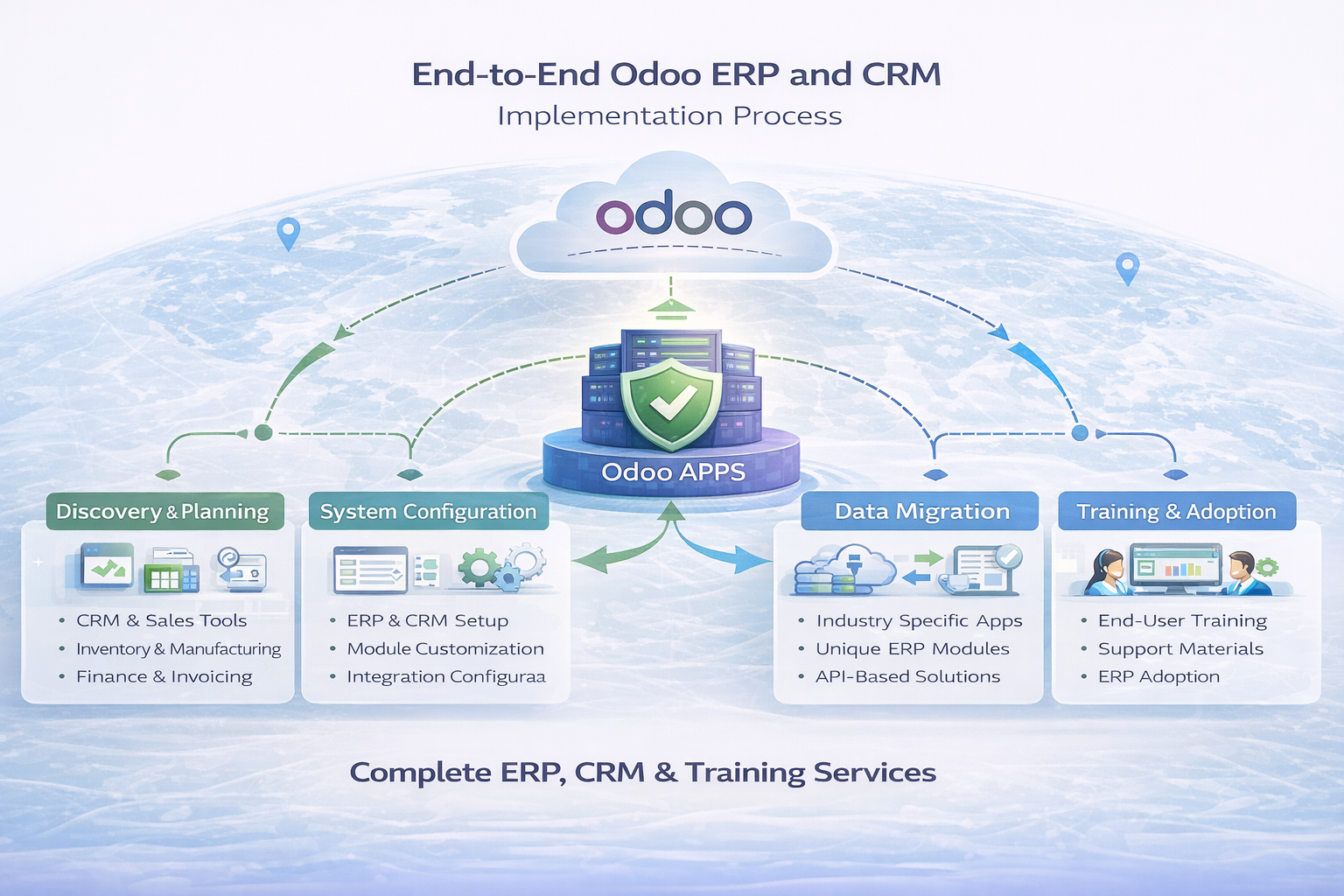
Odoo ERP implementation refers to deploying Odoo modules, migrating data, configuring workflows, integrating systems, training users, and enabling support to run a business end-to-end on a unified ERP platform.
Key deliverables of implementation:
- Business process mapping
- Module configuration
- Data migration
- System integration
- User onboarding & training
- Ongoing Odoo implementation services
2. Core Components of Odoo Implementation Cost
The Odoo implementation cost is not fixed; it depends on business size, customization depth, integrations, and deployment type. Below are the major cost blocks:
Although Odoo Community is free, Odoo Enterprise requires licensing based on users and apps.A certified Odoo ERP implementation expert evaluates needs, prepares a roadmap, and recommends modules.Includes setting up core modules like Sales, Purchase, Inventory, Accounting, CRM, and others via Odoo implementation services.
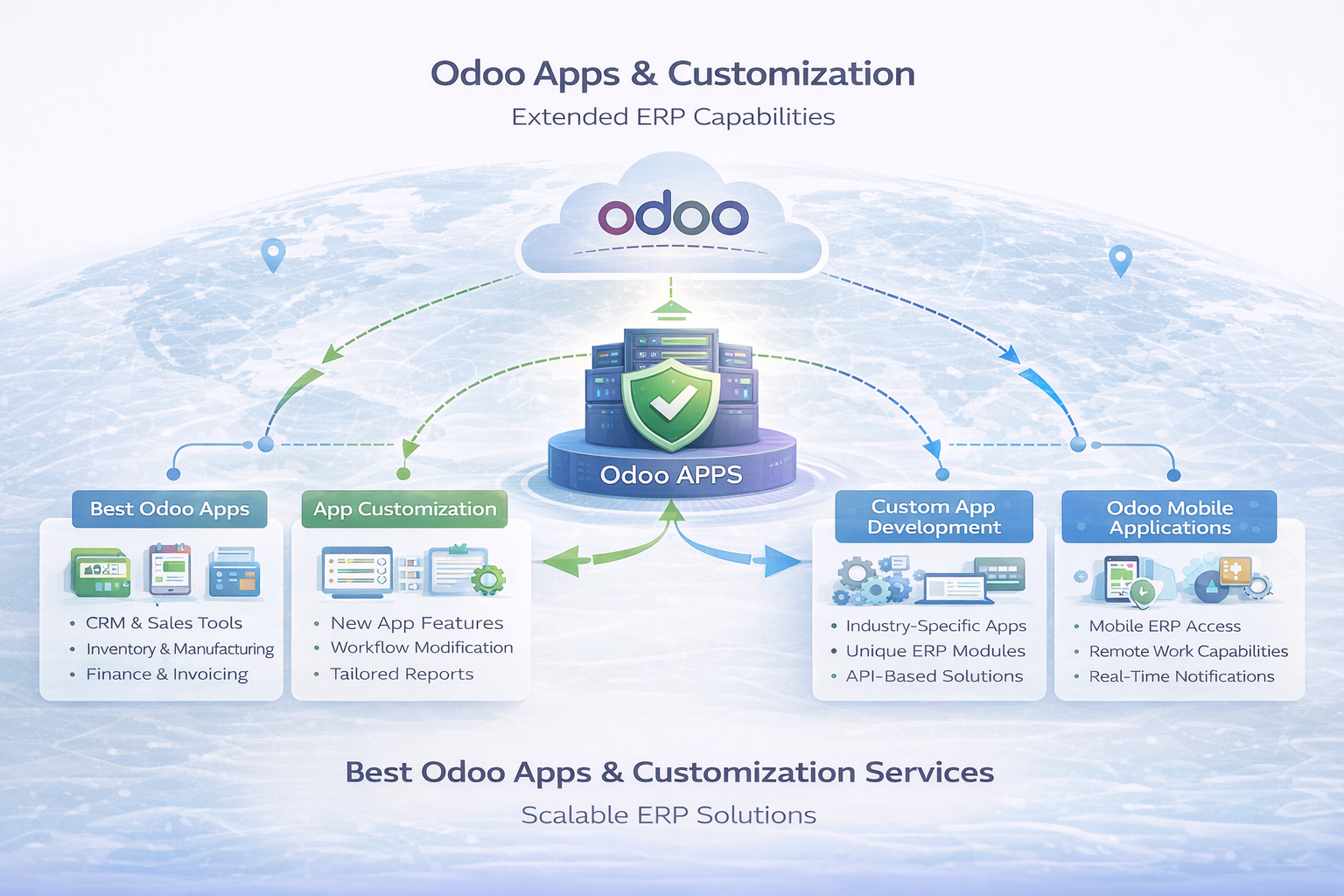
Businesses often require custom Odoo development which increases costs depending on:
- Custom modules
- Automated workflows
- Custom dashboards & reports
Common integrations include:
- Odoo ERP integration with third-party systems
- Ecommerce platforms
- CRM tools
- Marketplaces
This often involves Odoo API integration and middleware services.
Migration cost depends on:
- Data volume
- Source system complexity
- Cleansing requirements
Cost varies based on deployment type:
- Cloud hosting
- On-premise servers
- Odoo.sh platform
Covers:
- Admin training
- User role-based training
- Documentation
Post-go-live services include:
- Bug fixes
- Enhancements
- Helpdesk & ticket support
- Long-term Odoo implementation services
3. Factors Affecting Odoo Implementation Costs Globally
- Business Size and Complexity – Larger enterprises with multiple departments will require more modules and customizations.
- Number of Users – More users mean higher license and support costs.
- Customization Needs – Extensive custom workflows and reports increase development cost.
- Integration Requirements – Connecting with existing ERP, CRM, or eCommerce platforms adds complexity.
- Deployment Model – Cloud hosting is generally cheaper than on-premise, which involves hardware and maintenance costs.
- Regional Compliance – Different countries may require additional features for taxes, currencies, and legal reporting.
4. Factors That Increase Odoo ERP Implementation Cost
More users = higher license + training cost.Apps installed directly from Odoo App Store add to licensing.Heavy Odoo ERP customization increases dev cost.Multiple system syncs using Odoo API integration raise costs.Large migration sets increase cost.On-premise setups cost more than cloud.
5. Choosing the Right Odoo Implementation Partner
The right Odoo implementation partner ensures controlled costs, faster deployment, and long-term success.
- Proven Odoo ERP implementation services
- Functional + technical expertise
- Integration experience
- Training & support capability
- Scalability planning
An Odoo integrator specializes in system deployment and third-party connectivity.
An Odoo implementation company provides full lifecycle services including configuration, migration, and post-support.
6. Benefits of Investing in Odoo ERP
Despite upfront costs, Odoo ERP offers long-term value:
- Centralized Data Management – Single source of truth across departments.
- Automation & Efficiency – Reduces manual errors and operational delays.
- Scalability – Easily add modules or users as the business grows.
- Real-Time Analytics – Informed decision-making with comprehensive dashboards.
- Global Reach – Multi-language, multi-currency, and compliance support for international operations.
7. Choosing the Right Odoo Implementation Partner
Selecting an experienced Odoo implementation partner is critical for success, especially for worldwide businesses. Look for partners who offer:
- Proven global implementation experience
- Industry-specific solutions
- Customization and integration expertise
- Training and post-implementation support
Conclusion
Budgeting for Odoo ERP implementation requires understanding licensing, configuration, customization, integration, migration, and support services. Choosing the right Odoo implementation partner and leveraging Odoo implementation services efficiently ensures optimized costs, faster deployment, and scalable long-term growth.